
Stories
by our Outreach and Programs Coordination Team Autism Awareness Day is observed every year on April 2. It's a day to help our communities learn more about autism and how to show support for folks with autism. Autism is a way that some people’s brains work, which makes them see, feel, and understand the world differently. Autism is not an illness or something to be cured. It's simply one of many ways human brains can be wired. People with autism might communicate, socialize, or learn in ways that are different from “societal norms”. Some people with autistic traits like routines and may feel upset when unexpected changes happen quickly. Some individuals might have strong interests on certain topics or enjoy spending time alone. Others might feel overwhelmed by bright lights, loud noises, or busy places. Not all people with autism are the same. Each person is unique, with their own strengths and challenges. Sometimes, people misunderstand autism because of myths or stereotypes. For example, not everyone avoids eye contact and many do want to create friends, relationships, and community. Some may talk a lot, while others may use few words or none at all. It's important to listen to each person and respect how they choose to communicate. If you know someone who is autistic, there are many ways to be supportive. Be patient and kind if they need extra time to talk or process things. Avoid making loud noises or sudden changes that might upset them. Ask questions respectfully about what makes them comfortable or uncomfortable. Never talk about them as if they are not there - because that’s rude in every situation with anyone. Include them in activities and conversations, but respect if they want time alone. Over time, this annual observance has grown from a focus on awareness to a broader movement toward acceptance, understanding, and inclusion. Some organizations now refer to April 2nd as World Autism Acceptance Day. Happy Autism Acceptance Day. Now that you’re familiar with a mini 101, go make a space safer because you can! SUPER COOL RESOURCE by Elise Gravel : What is Autism?
by our Outreach and Programs Coordination Team A land acknowledgement is a statement that recognizes that the place where we live, work, or gather is on the traditional territory of Indigenous Peoples. It is a way of showing respect for the people who have cared for the land for thousands of years and who still live on and protect it today. Long before settlers arrived, Indigenous Nations had their own systems of government, laws, and ways of life connected deeply to the land. When settlers came, they often claimed land without permission, forced Indigenous people from their homes, and made laws trying to erase Indigenous cultures and languages. Even today, Indigenous communities continue to fight for their rights and to protect their lands and traditions. A land acknowledgement helps remind us that colonization is not only history—it still affects Indigenous people in many ways today. Saying a land acknowledgement is a small act of respect and recognition, but it should also lead to action. Real support means learning more about Indigenous nations in your area, listening to Indigenous voices, and finding ways to support Indigenous communities. People often say land acknowledgements at the start of meetings, events, or public gatherings. For example, someone might say, “We acknowledge that we are on the traditional and unceded territory of the Algonquin Anishinaabe People.” The word “unceded” means that Indigenous people never gave up the land through treaties or agreements. If you want to create your own land acknowledgement, it’s important to learn which Indigenous nations live in your area. Avoid just copying a script. Speak sincerely and make it personal if you can. It’s also respectful to pronounce the names of Indigenous nations correctly, so take time to practice. Land acknowledgements are not a replacement for taking real steps toward reconciliation, like supporting Indigenous-led initiatives, learning about Indigenous history, or standing up against injustices Indigenous people face. They are one small piece of building respect, understanding, and justice. Learning about land acknowledgements helps us remember that the land has a long and rich history beyond the buildings, roads, and cities we see today. It’s a way to honour the people who came before us and who are still here, protecting and caring for these lands. Being an ally is about disrupting oppressive spaces by educating others on the realities and histories of marginalized people. National Indian Residential School Crisis Line: 1-866-925-4419 Mādahòkì Farm Indigenous Allyship: An Overview Native Land Digital: What Land Are You On? Tools for Researchers

by our Outreach and Programs Coordination Team Black History Month is a time to recognize, celebrate, and learn about the history, achievements, and experiences of Black people and communities. It exists because, for a long time, many important stories, contributions, and voices were ignored or left out of history. This month helps make space for those stories to be seen, heard, and respected. Black History Month is not only about learning facts from the past. It is also about understanding how history shapes the present. Black individuals have made important contributions to science, art, education, activism, literature, and everyday community life. Their impact is part of the world we live in today, even if it is not always fully acknowledged. Learning about Black history can help young people develop empathy, awareness, and respect for different lived experiences. It reminds us that people may face unfair treatment, discrimination, or barriers simply because of their race. Recognizing this helps us better understand why inclusion, equity, and kindness are so important. For example, a child might notice that certain historical figures are talked about more than others in school, while many Black leaders, inventors, and creators are mentioned less often. Learning during Black History Month helps fill in those gaps and gives a more complete and accurate understanding of history. It also encourages conversations about fairness, identity, and belonging. Black History Month can also be a time for reflection. It invites us to think about how our words, actions, and environments affect others. At Centre 33, we make a great effort to create inclusive spaces, and that means making sure everyone feels safe, respected, and valued for who they are. This includes listening to different perspectives, challenging stereotypes, and standing up against racism and exclusion. Not everyone experiences Black History Month in the same way. For some, it is a time of pride and celebration. For others, it may also bring up feelings connected to difficult histories and ongoing inequalities. Both experiences are valid and important to acknowledge. Understanding Black History Month reminds us that diversity strengthens communities. When we learn about different cultures, histories, and experiences, we become more compassionate and supportive of one another. Recognizing and celebrating Black history helps create a world where everyone’s identity, story, and contributions are respected and valued.
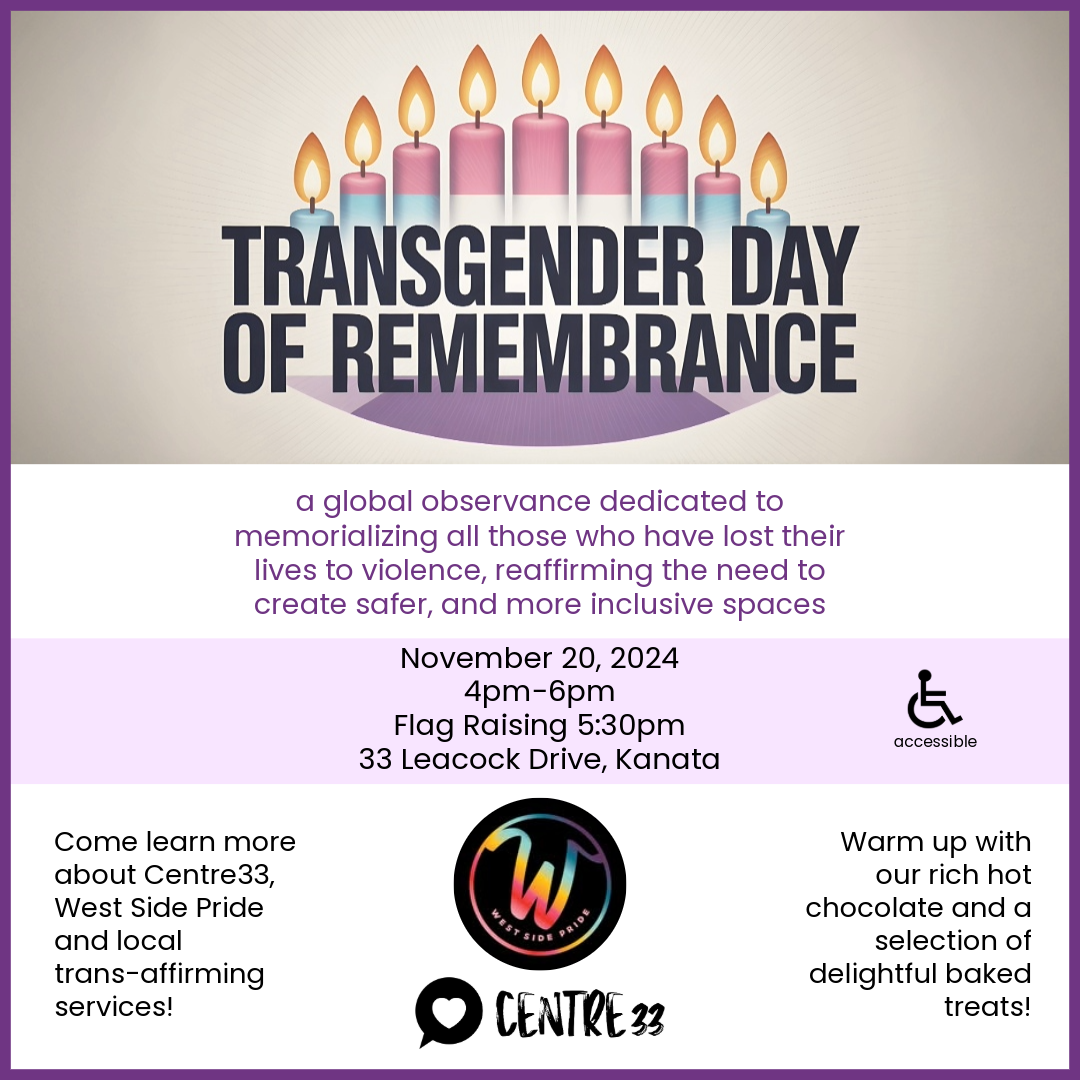
by our Outreach and Programs Coordination Team Trans Day of Remembrance takes place every year on November 20. It is a day to remember and honour the transgender people who have lost their lives to violence, hatred, and discrimination. It is also a time to support the trans community and call for a world where everyone can live safely, no matter their gender identity. Sadly, transgender people, especially trans women of colour, face high rates of violence and harm around the world. Many are targeted simply for being who they are. TDOR helps shine a light on this reality and reminds everyone that more needs to be done to protect and respect trans people. On this day, people gather for vigils, where names of trans people who have been killed in the past year are read aloud. These gatherings can include candles, moments of silence, music, or speeches. People also share stories, art, and messages online to honour those who have been lost and to show support for the living trans community. There are many ways to take part in Trans Day of Remembrance. You can attend a vigil, either in person or online. You can learn about the challenges trans people face and listen to trans voices and stories. Sharing information with friends and family can help raise awareness and build understanding. Supporting trans-led organizations and speaking out against transphobia in your community are also important ways to help. Trans Day of Remembrance is important because it reminds us that trans people deserve to live safely and with dignity. It calls on everyone to stand up against hate and to work for a world where all people can live as their true selves without fear. Join Centre33 and West Side Pride on November 20, 2025 as we honour those lost. In memory and solidarity on Trans Day of Remembrance.